
Instrument Expert
Original factory packaging

Service Hotline:
(+86)010-52867771
Instrument Expert
Original factory packaging
Service Hotline:
(+86)010-52867771
Updated:2026-05-18
Views:1458
 WeChat
 QQ
QQ
 Online Service
 CH-10 Data Sheet CH-10 Guidelines CH-10 CAD Drawings
Reliable and Versatile Optical Choppers
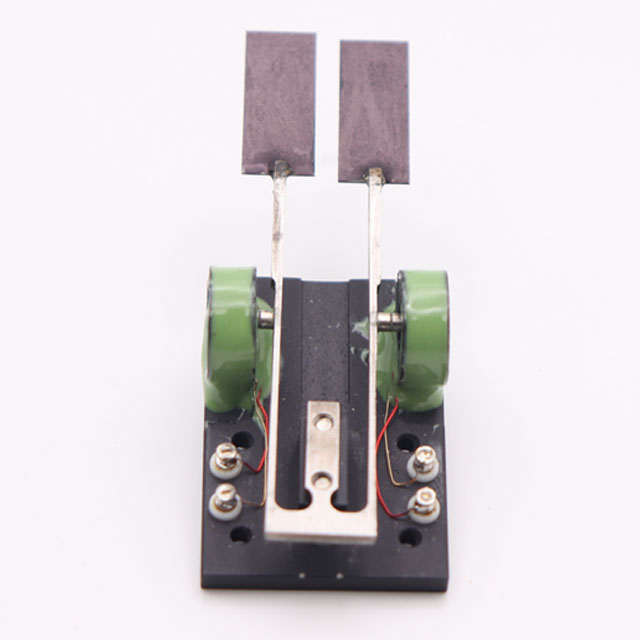
Optical choppers are widely used in various scientific applications, usually in combination with lock-in amplifiers. Among optical choppers, tuning fork choppers stand out as the most dependable. With an impressive lifespan, they excel even in extreme environments such as high temperatures, ultra-high vacuums, and cryogenic conditions. Their versatility extends to chopping light, plasma, X-rays, and laser beams.
Key Features of Tuning Fork Choppers
Cost-Effective and Compact:The CH-10 is cost-effective, compact, and lightweight, making it suitable for a wide range of applications, OEM, built into an instrument or system, and for small, portable and hand-held systems.
Long Life:Offering virtually limitless operational life, tuning fork choppers are ideal for dedicated applications, OEM integration, and incorporation into both large instruments and small portable systems.
Military Specifications Available:Special orders for tuning fork choppers meeting military specifications are also accommodated.
Operating Principle
Unlike rotating choppers, a tuning fork chopper operates at one fixed frequency. The chopper moves at the natural resonant frequency established by the effective mass of the moving assembly and the spring constant of the tines. Vanes, attached to moving tines, open and close an aperture to modulate a light beam. Balanced operation and high "Q" insure excellent frequency stability, low electrical drive power and low reaction forces. High flexural stiffness provides good resistance to shock and vibration.
Frequency Range and Aperture Size
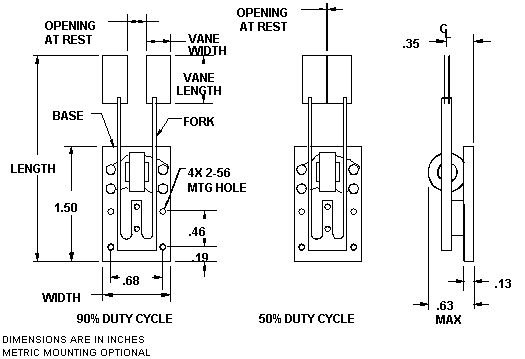
The chopping frequency is chosen from a specified range, with practical apertures of up to 15mm for frequencies under 100 Hz. If the beam size is a limiting factor, beam focusing is recommended.
The following should serve as guide lines only::
| FREQUENCY(Hz) | WIDTH | VANE |
OPENING AT REST(inches) |
||
| SINGLE COIL (inches) |
DOUBLE or TRIPLE COIL (inches) |
LENGTH (inches) | WIDTH (inches) | ||
| 10-50 | 0.88 | 1.00 | 0.63 | 0.37 | 0.20 |
| 60-200 | 0.88 | 1.00 | 0.63 | 0.31 | 0.20 |
| 200-400 | 0.88 | 1.00 | 0.50 | 0.31 | 0.20-0.10 |
| 400-600 | 0.88 | 1.00 | 0.40 | 0.24 | 0.10-0.06 |
| 600-800 | 0.88 | 1.00 | 0.40 | 0.24 | 0.06-0.04 |
| 800-1000 | 0.88 | 1.00 | 0.40 | 0.23 | 0.04-0.03 |
| FREQUENCY | 50% DUTY CYCLE | 90% DUTY CYCLE | ||
| FULL APERTURE | FULL APERTURE | |||
| (Hz) | (mm) | (inches) | (mm) | (inches) |
| 10-150 | 5.1 | 0.20 | 10.2 | 0.40 |
| 200 | 4.0 | 0.16 | 8.1 | 0.32 |
| 250 | 3.8 | 0.15 | 7.6 | 0.30 |
| 300 | 3.1 | 0.12 | 6.1 | 0.24 |
| 400 | 2.4 | 0.10 | 4.8 | 0.19 |
| 450 | 2.0 | 0.08 | 4.0 | 0.16 |
| 500 | 1.8 | 0.07 | 3.6 | 0.14 |
| 600 | 1.5 | 0.06 | 3.0 | 0.12 |
| 700 | 1.2 | 0.05 | 2.0 | 0.09 |
| 800 | 1.0 | 0.04 | 2.0 | 0.08 |
| 900 | 0.8 | 0.03 | 1.6 | 0.07 |
| 1000 | 0.6 | 0.03 | 1.2 | 0.05 |
Flexibility and Options
Standard options include dark or bright vanes. Dark vanes are generally light aborbent and bright vanes are generally light reflective. Special vane configurations, such as mirrors, lenses, gratings, and custom shapes, are available upon consultation. Additionally, a range of drive electronics with diverse packaging, regulation, and power supply options are offered. Special pricing is extended to OEM applications. The standard operating temperature range is -40°C to +65°C.
Aerospace and Atmospheric Research:Tuning fork choppers find extensive use in aerospace and atmospheric research due to their ultra high vacuum, cryogenic, and high-temperature capabilities.
Detection and Noise Filtering:In detection applications where optical signals are obscured by noise, a fixed-frequency modulated signal can be isolated from the background using a lock-in amplifier. The detected signal and the reference signal (mixed with the frequency of the tuning fork chopper) cause the frequency of interest to appear as a pure dc output level. All other signals are filtered with the low pass filter. Once noise is removed, proper signal measurements can be obtained.
ED Driver and AGC Driver:Both function as tuning fork oscillators utilizing the chopper as a frequency source. The AGC driver also ensures high amplitude stability (0.005%) and offers both sine wave and TTL reference signals.
PLD-1C Driver and PLD-2C Driver:These drivers enable phase locking of tuning fork choppers to external clock signals, allowing for synchronized operation in master/slave configurations.
TYPE [CH-10]; DUTY CYCLE [%]; VANE [B=bright or D=dark]; FREQUENCY [Hz]
Example: PART NO. CH10-90D-825. This part number specifies the model CH-10 chopper, with 90% duty cycle, dark vanes and an 825 Hz operating frequency. Special vane configurations, modulating waveforms and shapes are available on special order. Consult factory. Drive electronics with different packages, regulation, and reference signal and power supply options are available. Special pricing for OEM applications.
Customer Service QQ
Customer Hotline:
Technical Supports




 3003988120
 yiqi.com
 bio-equip.com
 b2bwork.baidu.com
 baidu.com